Are You Considering Cortisone Injections?

Are You Considering Cortisone Injections - Perth Wellness Centre

Corticosteroid therapy are among the most commonly used treatment modality in the orthopaedic world. They are powerful anti-inflammatory drugs that provide strong and quick effects to conditions such as osteoarthritis, tennis elbow, plantar fasciitis, gout, tendonitis and trigger finger.

Posture Program at Perth Wellness

Perth Wellness Centre - Posture Program at Perth Wellness

Posture is needed for our performance in daily life activities such as work, sport, leisure activities and self-care (Lahovski and Paulson, 2012). However poor posture can be caused by extended sitting or standing, prolonging muscle contractions holding postures and therefore, causing abnormalities.

Tips on Managing Allergies in Perth, Australia

Perth Wellness Centre - Tips on Managing Allergies in Perth Australia

An allergic reaction is, in essence, your body’s way of reacting to a potentially dangerous foreign unknown invader in the only way it knows how to. When your body encounters a potential threat in the form of an allergen most commonly, certain types of food

Omega 3 and Brain Function

Perth Wellness Centre - Omega 3 and Brain Function

Everyone is very concerned with their omega 3 levels and rightly so. Omega 3 is such an important nutrient that our body requires but are we getting enough? And is what we are getting good enough for our bodies? Research has shown omega 3 fatty acid status correlates positively with brain plasticity and intelligence.

The Biopsychosocial Model and Why it’s Important in Our Practice

Perth Wellness Centre - The Biopsychosocial Model and Why it's Important in Our Practice 2

Our clinic is passionate about our philosophy of looking at individuals or clients holistically following our well-known triangle of health including but not exclusive to physical, chemical and emotional health. Why is this important if you just have tight muscles? Or occasionally get headaches?

Effect of Kinesiology Taping on Swelling and Bruising

Effect of Kinesiology Fan Taping on Swelling and Bruising - Blog Post 2

Fan taping with kinesiology tape can assist with acute soft tissue injuries resulting in swelling and bruising. A study found that the taping increases the space between two layers of skin and therefore forces the excess fluid to drain into the lymphatic system subsequently contributing to the healing of the soft tissues.

Posture Correction in Teenagers

Bad Posture Teenagers | Perth Wellness Centre

We as health professionals believe that anterior posture is becoming a major issue in today’s society and is increasing our risk of injury in everyday life. Whether this is at work, school, home and what we do in our spare time. But where does it all begin? Why is this happening in children?

How to Treat Whiplash

Perth Wellness Centre - How to Treat Whiplash

Whiplash is an injury caused by a sudden and vigorous movement of the neck. When this sudden force occurs and the neck is moved beyond its normal range of motion, there is a possibility that the neck muscles, tendons, ligaments, discs or nerves may be injured.

How to Treat a Herniated Disc
Perth Wellness Centre Blogs - How to treat a Herniated Disc

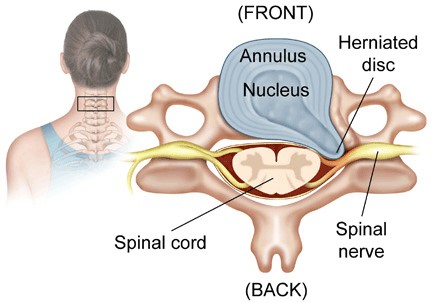
Between each of our spinal vertebrae we have an intervertebral disc. These discs play an important role in the normal functioning of our spines. They act as shock absorbers, hold the vertebrae together and allow slight movement of the spine.

What is Facet Syndrome?
Perth Wellness Centre Blog - What is Facet Syndrome

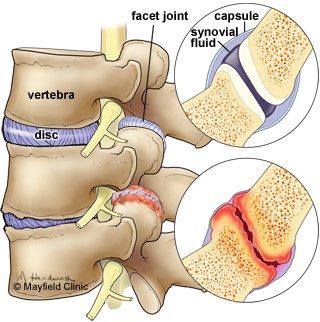
Facet joints are the joints between two vertebrae in your spine that allow and support movement such as bending and twisting. These joints can become inflamed resulting in restricted movement, pain and stiffness. Pain stemming from these joints is commonly referred to as Facet joint syndrome.

What is Facet Syndrome?

What is Facet Syndrome?

Facet joints are the joints between two vertebrae in your spine that allow and support movement such as bending and twisting. These joints can become inflamed resulting in restricted movement, pain and stiffness. Pain stemming from these joints is commonly referred to as ‘Facet joint syndrome’.

The facet joints have been found to account for 15-45% of low back pain and 40-55% of neck pain cases (Bykowski & Wong, 2012)

CAUSES (Alexander & Dulebohn, 2017)

  • Abnormal postures may overload the joints
  • Trauma such as whiplash
  • Constant and repetitive motion may cause wear and tear of the joints (For e.g. playing sports, heavy labour)
  • Degenerative changes in the spine due to aging, trauma or injury

SYMPTOMS

The location of pain or stiffness may vary depending on the location of the affected facet joint and can result in: (Kirpalani & Mitra, 2008), (Saravanakumar & Harvey, 2008)

  • Neck, mid-back or low-back pain and stiffness
  • Radiating pain in the shoulders, upper arms, buttocks or thighs
  • Difficulty bending and twisting
  • Headaches
  • Difficulty getting out of a chair or standing up straight
  • Pain with periods of inactivity such as sitting or standing for too long
  • Numbness, tingling and weakness in the arms or legs

DIAGNOSIS

Diagnosis begins with a thorough history and hands-on clinical examination by an experienced health care practitioner. In some cases X-rays, MRI and/or CT scans may be required to confirm the diagnosis.

Management of facet syndrome is usually multimodal and conservative treatment has been associated with a reduction in pain levels and improvements in spinal functioning. (Binder & Nampiaparampil, 2009), (Saravanakumar & Harvey, 2008)

Alexander CE, Dulebohn SC. Lumbosacral Facet Syndrome. [Updated 2017 Nov 5]. In: StatPearls [Internet]. Treasure Island (FL): StatPearls Publishing; 2018 Jan-. Available from: https://www.ncbi.nlm.nih.gov/books/NBK441906/

Binder DS, Nampiaparampil DE. (2009). The provocative lumbar facet joint. Curr Rev Musculoskelet Med, 2(1), 15-24. doi: 10.1007/s12178-008-9039-y

Bykowski JL, Wong WHW. (2012). Role of Facet Joints in Spine Pain and Image Guided Treatment: A Review. AJNR, 33(8), 1419-1426. doi: https://doi.org/10.3174/ajnr.A2696

Kirpalani D, Mitra R. (2008). Cervical Facet Joint Dysfunction: A Review. Arch Phys Med Rehabil, 89, 770-773. doi:10.1016/j.apmr.2007.11.028

Saravanakumar K, Harvey A. (2008). Lumbar Zygapophyseal (Facet) Joint Pain. Rev Pain, 2(1), 8-13. doi: 10.1177/204946370800200103

What is Facet Syndrome?

Perth Wellness Centre Blog - What is Facet Syndrome

What is Facet Syndrome?

Facet joints are the joints between two vertebrae in your spine that allow and support movement such as bending and twisting. These joints can become inflamed resulting in restricted movement, pain and stiffness. Pain stemming from these joints is commonly referred to as ‘Facet joint syndrome’.

The facet joints have been found to account for 15-45% of low back pain and 40-55% of neck pain cases (Bykowski & Wong, 2012)

CAUSES (Alexander & Dulebohn, 2017)

  • Abnormal postures may overload the joints
  • Trauma such as whiplash
  • Constant and repetitive motion may cause wear and tear of the joints (For e.g. playing sports, heavy labour)
  • Degenerative changes in the spine due to aging, trauma or injury

SYMPTOMS

The location of pain or stiffness may vary depending on the location of the affected facet joint and can result in: (Kirpalani & Mitra, 2008), (Saravanakumar & Harvey, 2008)

  • Neck, mid-back or low-back pain and stiffness
  • Radiating pain in the shoulders, upper arms, buttocks or thighs
  • Difficulty bending and twisting
  • Headaches
  • Difficulty getting out of a chair or standing up straight
  • Pain with periods of inactivity such as sitting or standing for too long
  • Numbness, tingling and weakness in the arms or legs

DIAGNOSIS

Diagnosis begins with a thorough history and hands-on clinical examination by an experienced health care practitioner. In some cases X-rays, MRI and/or CT scans may be required to confirm the diagnosis.

Management of facet syndrome is usually multimodal and conservative treatment has been associated with a reduction in pain levels and improvements in spinal functioning. (Binder & Nampiaparampil, 2009), (Saravanakumar & Harvey, 2008)

Alexander CE, Dulebohn SC. Lumbosacral Facet Syndrome. [Updated 2017 Nov 5]. In: StatPearls [Internet]. Treasure Island (FL): StatPearls Publishing; 2018 Jan-. Available from: https://www.ncbi.nlm.nih.gov/books/NBK441906/

Binder DS, Nampiaparampil DE. (2009). The provocative lumbar facet joint. Curr Rev Musculoskelet Med, 2(1), 15-24. doi: 10.1007/s12178-008-9039-y

Bykowski JL, Wong WHW. (2012). Role of Facet Joints in Spine Pain and Image Guided Treatment: A Review. AJNR, 33(8), 1419-1426. doi: https://doi.org/10.3174/ajnr.A2696

Kirpalani D, Mitra R. (2008). Cervical Facet Joint Dysfunction: A Review. Arch Phys Med Rehabil, 89, 770-773. doi:10.1016/j.apmr.2007.11.028

Saravanakumar K, Harvey A. (2008). Lumbar Zygapophyseal (Facet) Joint Pain. Rev Pain, 2(1), 8-13. doi: 10.1177/204946370800200103